the first awkward step is still a beginning
A screen can show you the finished thing before you have learned how to make the first rough version.
You see the clean photograph, the confident paragraph, the graceful painting, the person who seems to know exactly what they are doing. The internet gives you the result in seconds and leaves out the missed attempts, abandoned drafts, and long practice that made it possible. Then you try.
Your first attempt looks painfully unlike what you had in mind. Not terrible, exactly. Just new. The timing is off. The words do not land. The whole thing has the posture of someone who has just sat at the keys and is pretending to understand the piece. This is not a personal failure. It is the normal distance between taste and skill.
The internet gives you taste before skill. You may already know what a strong photograph, a clear voice, or a beautiful object looks like. You can feel when something is almost right, but recognition is not the same as control.
A creator can spend years learning, then compress those years into twelve seconds. A finished project appears with clean edges and a caption that makes the process sound obvious. You do not see the hours behind it. You hear the phrase already played cleanly through.
So you compare someone else’s tenth year with your Tuesday afternoon. Of course it hurts. The answer is not to lower your standards until you stop caring. Your taste is useful. It gives you a direction. The work is learning how to move toward it without treating every imperfect result as evidence that you should turn around.
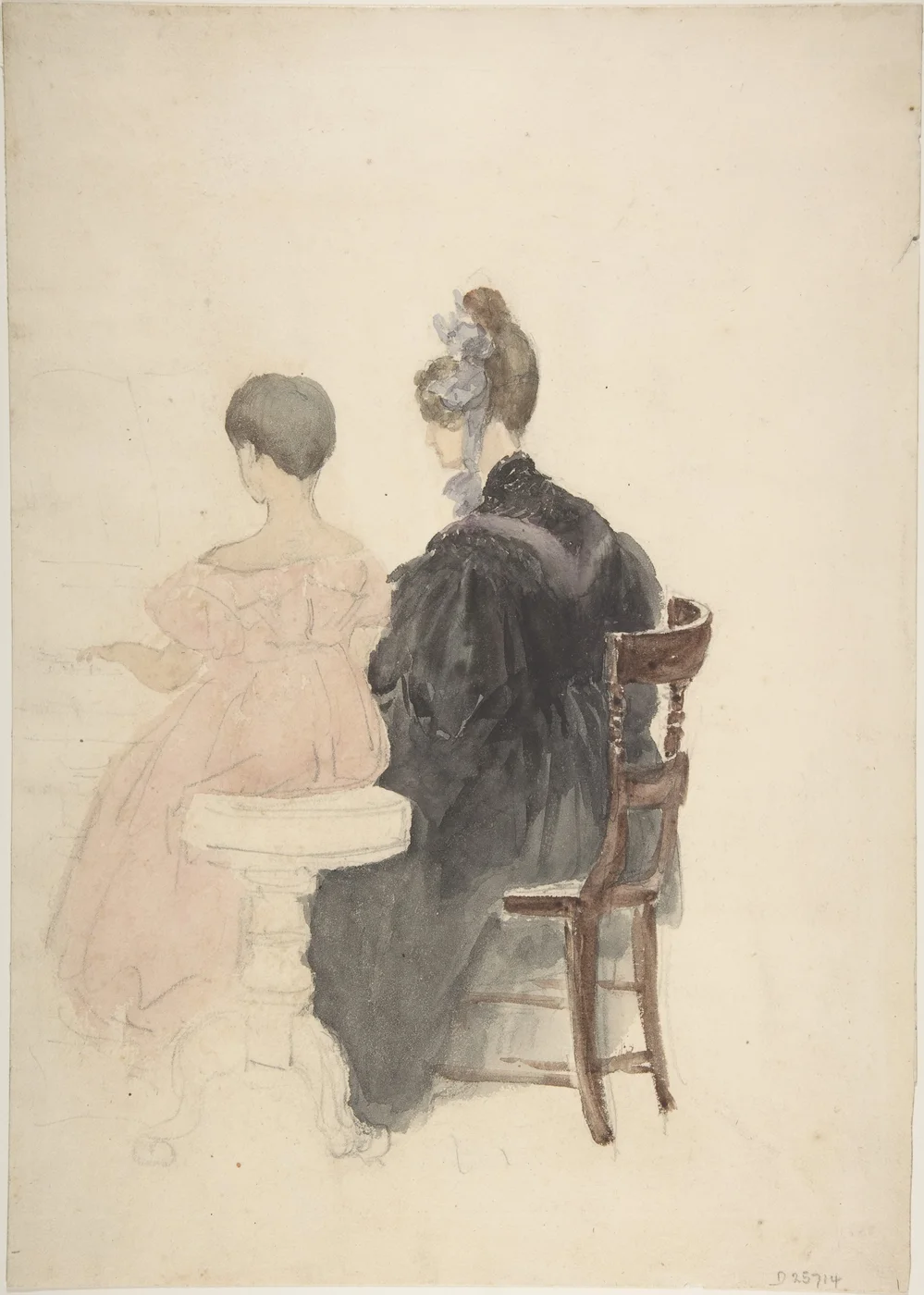
David Cox’s A Piano Lesson gives a truer picture of beginning than most advice does. In the watercolor, a pupil sits at the keys with a teacher nearby. Beginners’ hands rest on the keyboard. The lesson is close and ordinary, and nothing requires the pupil to be an expert before it begins.
That is the permission built into practice. The playing does not need to sound graceful for the lesson to count. The hands need to find the keys, try the notes, and make contact.
Finished work hides time. When you look at polished work online, you are looking at time that has been edited out. It is like sitting down at a piano after hearing a concert from the best seat in the hall. You know how the passage should sound. Then your hands miss the shape of it.
The mistake has not insulted you. It has simply told you what happened. Maybe the notes came too slowly. Maybe the timing was uneven. Maybe you were trying so hard to avoid a wrong note that you forgot to play through. A miss contains information, not a verdict.
Practice makes room for visible incompetence. It interrupts self-consciousness because the result cannot teach you anything until it exists. You cannot adjust a phrase you never play.
Repetition gives you information. One phrase played again begins to show a pattern. You stop trying to perform confidence and start paying attention. Then “I am bad at this” can become “the beginning is too slow.” That is a problem you can work with.
Confidence follows contact with the work, not the other way around. You make a clumsy attempt. You notice one thing. You try again with that detail in mind. Slowly, the distance between what you see and what you can do begins to narrow.
The internet will keep showing you people farther along in the piece. Let it. Their work can be a map instead of a measuring stick. Admire the clean phrase without pretending you are supposed to play it on your first try. Start where you are. Listen for where it breaks.
Let the next attempt begin there.