courage is sometimes just pulling together
Courage is often one useful thing, followed by another.
It is usually described as a big moment: the rescue, the speech, the impossible choice made under bright lights. Most courage looks smaller. Someone makes the phone call. Someone stays awake. Someone brings water. Someone reads the instructions twice because nobody is sure what to do next.
Fear does not disappear first. Hands may still shake. The mind may still be full of worst-case thoughts. But one useful thing gets done. Then another.
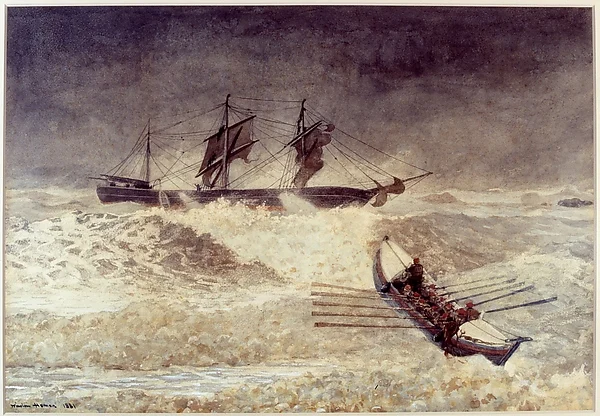
In Winslow Homer’s The Wreck of the Iron Crown , a lifesaving brigade rows through heavy surf toward a sailor stranded after a shipwreck. The boat is small against the water, and the sea does not become calm for them. They cannot smooth the surface, stop the wind, or guarantee the next wave. They can only keep rowing.
That is what makes the image feel true. Courage looks less like fearlessness and more like coordination. One person rows, another keeps time, someone watches the water, and someone holds on. No single person controls the sea, and no single person can promise the outcome, but the boat moves because several people keep doing their part.
When life becomes frightening, the mind often leaps ahead. It imagines every consequence at once and tries to solve the whole crisis before breakfast, before the appointment, before the next phone call. The next useful thing is usually smaller: send the message, eat something, write down what is known, ask what is needed, make the appointment, sit beside someone who should not be alone, take the next breath before making the next decision.
These actions can look too small to deserve the word courage, but courage is not measured by how dramatic an action appears from the outside. It is measured by what the action costs the person taking it. A simple phone call can require enormous bravery when you already know the news may hurt.
Shared effort is not shared certainty. Fear does not spread evenly. One person may be calm because they have done this before, while another may be quietly panicking and still look perfectly capable. That does not mean the group is failing. It means people bring different amounts of strength to different moments.
There is a difference between asking someone to be strong and helping them stay involved. “Be strong” can sound like a demand to hide the shaking. “Let’s do this together” leaves room for shaking and says a person can be afraid and still matter to the work.
No one person should become the whole rescue. The dependable one may be capable and willing, but willingness is not unlimited capacity. A rescue that depends entirely on one exhausted person is not a rescue plan. It is another emergency waiting to happen.
There is also courage in staying with work that is unfinished. Many difficult seasons do not offer a clean ending on schedule. There may only be another morning, another form, another meal, another careful conversation. In a storm, progress may be hard to see. But distance is crossed one stroke at a time.
If you are afraid right now, you do not need to perform courage for anyone. You do not need to sound calm or have the complete plan. Try asking a smaller question: What is the next useful thing, and who can do it with me?
Those words do not weaken the boat. They help people find their places in it.
Sometimes courage is not feeling fearless. Sometimes it is refusing to leave the necessary work to one frightened person alone.