Which dreams are mine, and which came from the world?
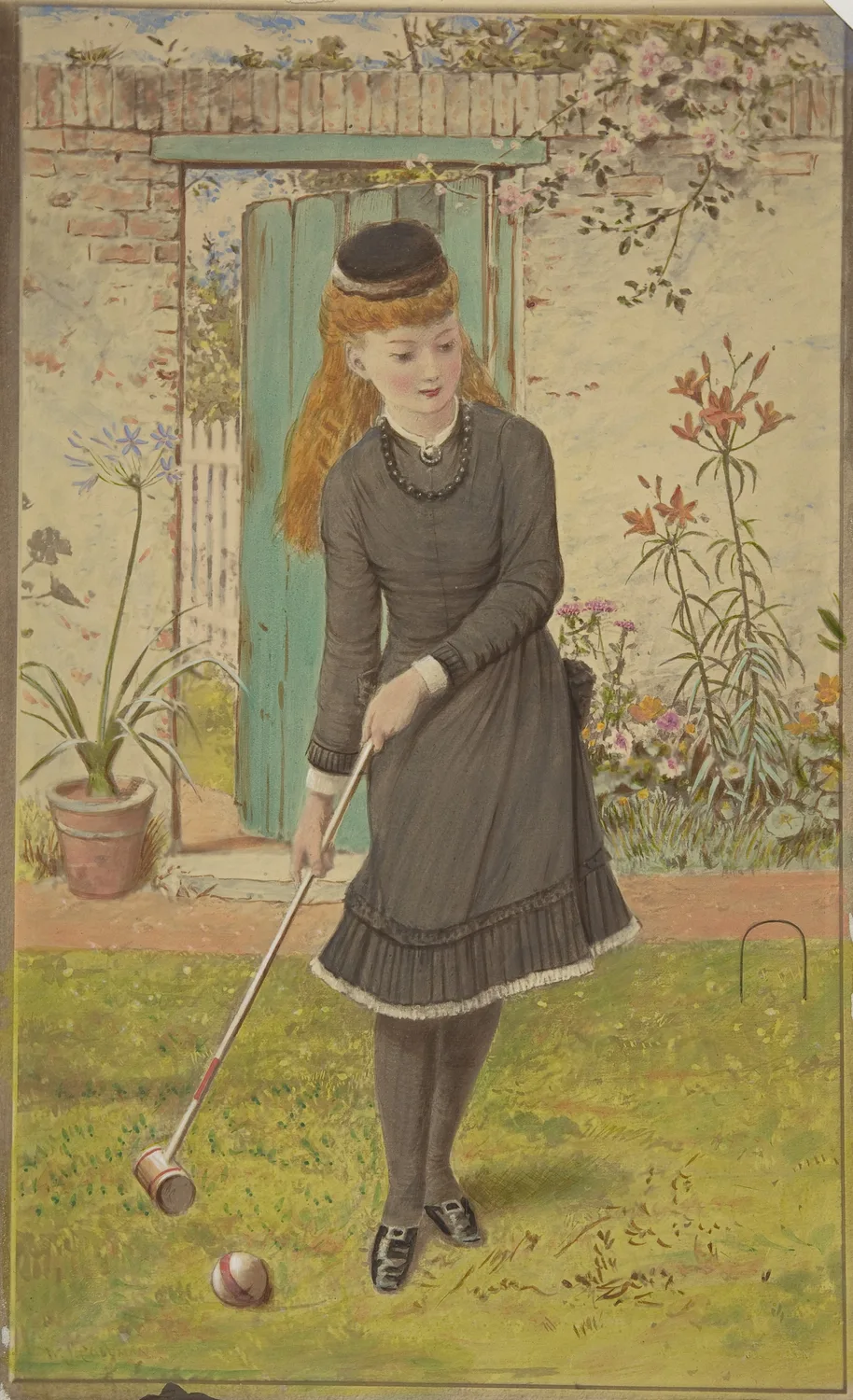
A girl stands on a trimmed lawn with a croquet mallet in her hands.
The flowers are in place. The wickets wait in a neat row. The garden is beautiful, but the game already has its rules. Someone hands you a mallet, and everyone around you seems to know what happens next: hit the ball, aim for the opening, follow the course, keep score.
That is what makes the girl in Coleman’s painting feel familiar. She stands in softness, but the game is already arranged. Most of us learn life this way. No one hands us a manual, but we collect the rules in fragments until they begin to sound like our own thoughts.
A parent says you need a stable career. A teacher praises the child who never causes trouble. A relative asks when you are getting married. An advertisement shows a bright kitchen, a clean body, a happy couple. A friend gets promoted, and suddenly your own life feels late.
Some dreams are borrowed. Career, money, home, being needed: none of these is automatically false, but the trouble begins when you no longer know why you want them. The outside result can look fine and still feel strange to live inside. You may want the promotion because you love the work, or because you are afraid of looking ordinary.
Being good at something does not prove that it is yours. A croquet ball can pass every wicket cleanly and still be moving on a course someone else chose. This is one of the harder confusions of adult life. Skill looks a lot like desire from the outside, especially when other people admire it.
Not every rule is the enemy. Bills still matter. Promises still matter. Care still matters. The point is not to reject every structure that shaped you. The point is to know which rules you are following and why.
A borrowed dream usually needs an audience. It wants someone to approve, envy, regret, or applaud. A real desire is often quieter. It can survive without being seen.
That is why a useful question is simple: who taught me to want this. Not only is this dream good or impressive, but where did it come from, and would I still want it if nobody knew.
The answer is not always dramatic. Choosing can be ordinary. You let a message wait until morning. You wear the thing you like. You admit you no longer want to win a competition nobody announced.
You do not have to leave the garden to choose differently. You can respect where you came from without repeating every decision made before you were born. You can stay connected to the people who raised you, shaped you, or helped you, and still stop handing them the map. Inherited hope can live beside honest refusal.
The girl in the garden is not wrong to play. Learning the rules is not failure. Attention has its own beauty. But every player deserves, at some point, to look up. Beyond the wickets there is more garden, and more life than the course was built to notice.
Maybe the work is not to invent a new self, only to hear your own desire under the noise. Maybe the dream can stay. Maybe it cannot. But the looking up matters.
When nobody is watching and nobody is keeping score, which desires still feel alive in you?